Tag Archives: anorexia

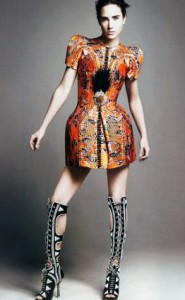
Does Jennifer Connelly Have an Eating Disorder?

I’ve always admired Jennifer Connelly as an actress, and well, a stunningly beautiful woman. Her latest film is the big budget sci-fi remake, The Day the Earth Stood Still. And it nearly did just that when I saw her make her entrance for an interview with David Letterman.

I’ve discussed actors and their obsessive dedication to gaining or losing weight for roles before. But a cursory look at her future roles doesn’t seem to call for an emaciated look.

If she is battling anorexia, it initially took me by surprise, because I thought that it usually afflicts people at a much younger age, even if it is an ongoing battle through a person’s life. It is most common in young women, health experts say, but it’s not impossible that it can happen with older people as well. Jennifer Connelly just turned 38 this month.

I’m obviously not making a diagnosis, but she certainly doesn’t look healthy.

Beware of Sites Encouraging Bulimia and Anorexia

It was way too easy to find the background information needed for this blog. I use Google.com enough to consider Google a verb. This search was frighteningly easy. Recently, I cautioned against inaccurate and even dangerous information on the internet. The internet can be a fabulous tool to find the information you need to help you achieve your goals; but like most information, you have to consider the source and accuracy of the information presented.

The DSM-IV classifies Anorexia Nervosa and Bulimia Nervosa as eating disorders, but there are a slew of websites that market these mental illnesses as lifestyle choices. The nicknames “Ana” and “Mia” for these disorders not only make them more user-friendly, but personify them as a friend to young girls. Pro-ana websites are being used as peer support groups to encourage weight loss beyond the limits of health. Whether it is an online community or an informational site, you are likely to find:

  • Secrets on hiding these disorders and weight loss from parents, physicians, and others.

  • Crash dieting techniques, low calorie foods, and recipes

  • Ways to “trick” your body, avoid cravings, and ignore hunger (more…)

Orthorexia: When Eating Healthy Goes Too Far

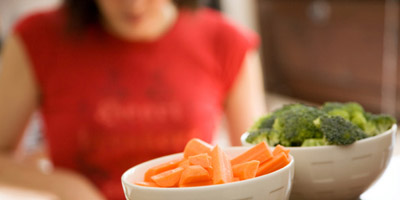
On 20/20 this past Friday night, they featured a new kind of an obsessive compulsive disorder called “orthorexia.” Orthorexics are individuals who take eating healthy to an extreme. They avoid eating not just a few things like trans fats or meat, but thousands of different kinds of food all in the name of health. It is a psychological addiction to food, but it differs from anorexics, who have a pathological fear of being fat. Orthorexics’ weight often plummets to anorexic levels. But they differ from anorexics because they know they are thin and want to gain weight.
orthorexia

It is no question that we are a culture that is extremely health conscious. We spend billions of dollars each year on diet products, books and supplements. But what makes orthorexia different than just abstaining from dairy, like vegans do, or not consuming any refined sugars is that orthorexics are obsessed with keeping their food pure. They avoid all processed food in addition to many fresh fruits and vegetables if they are not organic or certified by certain organic standards. Most of their day is either spent preparing their own food or thinking about food. Their obsession affects all aspects of their lives, particularly their relationships, as activities like family meal times and dining out are soon eliminated as their pursuit to be pure takes over.

No one way of eating is shown to be a leading culprit in enabling someone to become orthorexic, but raw foodists were associated with a higher risk of developing orthorexic tendencies.

The result is that most orthorexics become dangerously thin, because as the list of foods they can eat becomes smaller and smaller, so does their body weight. One of the orthorexics featured on the ABC program died when her weight plummeted too low to support her body from functioning.

As someone who is deeply involved in the yoga community, I have encountered scores of people who have let their desire to be healthy spiral out of control into a full-fledged addiction and obsession. I once met a man who only ate beets and another who only ate one meal a day which was the same day after day. Looking at some of these extreme cases, vegetarianism is a soft way of eating.

I am sure that we have all met people who have quirky or bizarre eating habits or dietary preferences. But what makes orthorexia so alarming is that as our awareness of and preoccupation with health increases, the more likely it is that we will see more cases similar to those shown on last week’s television show. To learn more about this disorder and to educate yourself on some of the telltale signs of orthorexia, watch this video.

Learn more about Orthorexia and how to treat it, in this book Health Food Junkies.

Eating Disorders Affecting Olympic Athletes

beijing olympics

It’s not just the pressure from fashion magazines and the Hollywood elite to be thin. For athletes, being thin means more. From making your weight to increasing your speed, the pressure for athletes to keep their weight at a certain level equates to pleasing coaches and securing a victory.

Even though men are not totally immune from eating disorders, by and large, the majority of eating disorder cases affect females. Most often, it strikes females in the late adolescent and college years and comes in the form of anorexia nervosa or bulimia. According to the organization Athletes with Eating Disorders, female athletes are at a double risk for developing an eating disorder. On one hand, she has the constant social pressure to be as thin as a model in a magazine or an actress on television; as an athlete, her sport often overvalues performance, low body fat, and promotes an idealized, unrealistic body size. Female athletes that participate in sports that value appearance and a lean body like figure skating or gymnastics, are more prone to developing an eating disorder.

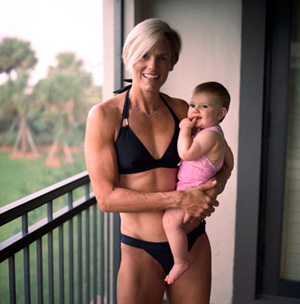
dara torresWhen an athlete steps up and admits of a past or current eating disorder, she (or he) should be lauded for their courage and openness. One such sports figure is swimmer Dara Torres. Dara, who just also happens to be 41 and a mother of a toddler, is about to vy for a gold medal at her fifth Olympics this summer in Beijing. In a recent interview, she openly discussed the pressure to be thin and make weight as a swimmer back in her college years. When the scales were tipping to high for her coaches’ likes, a friend in her dormitory showed her how to be a bulimic.

Dara’s bulimia lasted for about five years and during those years as a bulimic she competed in the 1988 Olympics and was ranked Number One in the world for 100 freestyle. But she placed seventh in the ’88 Olympics. When she decided to try out for the ’92 Olympics team, she realized that she could never make it if she continued on with her bulimia. Even though she was making weight, she had no energy. So Dara decided to quit. Just like that. Cold turkey.

Fast-forward 16 years and one pregnancy later and you have Dara’s inspiring physical and mental condition sending a clear message to all of us, including her young daughter: If you treat your body with respect and protection, its power can surpass your wildest expectations.

France legally bans the promotion of thinness

On Tuesday, April 15th, while most of us were scrambling to the Post Office to mail in our tax forms, France’s parliament adopted a bill to make it illegal for anyone to promote extreme thinness in men or women. From fashion moguls and magazines to websites on how to subsist on 200 calories a day or less, this legislation, if passed, would be truly groundbreaking for all of us who have suffered or who have known anyone to suffer from a body image or eating disorder.

It’s no doubt that extreme thinness in fashion models, as well as thousands of women throughout the world, is a serious and grave problem. You also have to consider how complex eating disorders are. It’s not just about food and a number on a scale. All of us are bombarded with images of skinny models wearing size 0 clothing, but only .5% to 1% of all young American women have anorexia and about 10% of young American women are bulimic. Obviously something else is going on here on a much deeper level than just being exposed to billboards and photographs of emaciated women.

That aside, A legislation like this would surely send a message to anyone or any company that idolizes or promotes the beauty of razor-thin women. And as someone who has battled with body image issues her whole life, I see this kind of initiative as a step in the right direction, even if proving it in court is near impossible.

What do you think about this legislation? Do you think it’s a step in the right direction or is France just putting a band-aid on cancer?

Faces of anorexia

In the recent issue of People magazine, Chloe Lattanzi, the young daughter of actress and singer Olivia Newton-John came public with her recent battle with anorexia. She is quite frank about how awful and debilitating this disease was, and still is, for her. But she is relying on the support of those around her and her burgeoning music career as a way to heal. She was also a contestant on the talent reality TV show, Rock the Cradle.

Once again, we see a figure in the media who seems to have it all, but becomes too immersed in and obsessed with some unhealthy lifestyle or behavior that leaves them fighting for their health, both mental and physical.

Chloe admits to being far from fully recovered, but as any addiction goes, no one ever fully recovers. It’s a day-to-day process. And to deal with her disease and recovery in the public spotlight can’t be easy.

From Mary-Kate Olsen to your teen-aged daughter’s friend, anorexia is a gripping disease. It’s a veritable prison for someone who is in the throes of it. As someone who has battled with restricted eating patterns, Chloe’s story was very familiar to me. And our story is similar to thousands of other women (and men) in this country and throughout the developed world where eating disorders are prevalent and devastating to the sufferer and those around her (or him).

If you have a story to share, we’d love to hear from you. We encourage you to seek the help of your doctor, family and friends if you find yourself battling an eating disorder.

Websites Promote Anorexia and Bulimia

Do you know what a “pro-ana” website is? It’s not new, but the idea is considered just as dangerous as ever before. Pro-ana is short for pro-anorexic. As crazy as it sounds, yes, there are websites that promote anorexia as a good thing for some ungodly reason. It’s thought that there are over 500 pro-ana and pro-mia (pro-bulimia) websites. It’s because of this that opponents are working with social networking websites to combat the phenomenon. More on this subject here.