





Tag Archives: bob greene

5-Week Holiday Survival Guide with $5000 in Prizes from The Best Life and DietsInReview

It’s as hard for us to believe as anyone else that “the holidays” officially kick off in just one week! We hope we aren’t the only ones already thinking about how to make this a healthful season where we spend more time giving thanks and less time feeling guilty.

We want to help ensure you have such a holiday season for yourself and your family. That’s why we’ve partnered with Bob Greene and team at The Best Life Diet for a five-week Holiday Survival Guide.

You’ll learn how to manage the craziest parts of the season – like overeating, stress, and fitting in a workout. If keeping you motivated weren’t enough, together we’re offering up more than $5,000 in prizes to help you end this year on a high note as you work on embracing all that lies ahead in 2026.

The Holiday Survival Guide kicks off on Tuesday, November 20 with a Twitter Party to get you in the spirit of this special event. Join us and the Best Life team for a one-hour event to introduce you to both of our social media teams, which will play an integral role in keeping participants motivated for five weeks.

TWITTER PARTY

Use #HolidayFit

Follow @TheBestLife and @DietsInReview

Start at 9 pm ET/6 pm PT on Nov. 20

You can officially sign-up to join The Holiday Survival Guide on Monday, November 19 at TheBestLife.com. Then, you’ll receive five emails each week through December focused on a different element of managing the season in a healthful way. Plus, find Facebook and Twitter posts each day to keep you on track. (more…)

5-Minute Breakfast Ideas to Fuel Your Mornings in a Hurry

By Bob Greene for TheBestLife.com

I’m a big fan of breakfast—in fact, starting off each day with a healthy, balanced breakfast is one of the key guidelines on my Best Life plan. A morning meal jump-starts your metabolism, delivers some much-needed energy after a night’s rest and can help with weight loss.

Don’t think you have the time? Check out these five dishes, which you can throw together in five minutes or less.


Speedy Cereal

Be picky about what you pour into your bowl. Our guidelines: Opt for a cereal that has at least 4 grams of fiber, no more than 5 grams of sugar, and no more than 120 milligrams sodium per 100 calories. (Click here for a list of healthy cereal choices.) Top it off with fat-free or one-percent milk or calcium-enriched soy milk. To add more nutrients and flavor, top with some fresh fruit or a tablespoon or two of nuts. Or try this shortcut: Mix a few healthy cereals together, put them in a re-sealable plastic bag, and go. (more…)

Oprah’s Favorite Things Returns with 6 Items for a Healthier Lifestyle

In 1996 Oprah greeted her audience with a treasure trove of free gifts and prizes as she debuted the hottest giveaway daytime TV had ever seen. Oprah’s Favorite Things has grown to be the stuff of legends, and people would give arms and legs to have a seat and a chance to take home the media mogul’s top picks for holiday gifts. Oprah’s a giver, a giver of high-quality, high-end, premium gifts and it’s hardly anything you’d find on a clearance rack.

Since the end of her wildly popular daytime talk show, Oprah’s Favorite Things has faded in to TV history. But now through her OWN network, O Magazine, and a new partnership with Huffington Post, Oprah’s breaking the two-year hiatus with the announcement of 48 items on the 2026 Favorite Things list.

Some of it is quite posh and not likely to make it on to the holiday budget of most of her fans (like a nearly $2,000 Jetson-style battery-powered scooter), but some of it is completely in reason. Even better, a few items on her list are even good for you!

Top of the list is the Q37ci elliptical trainer. It’s a pricey addition to a home gym at $3,099, but it certainly pays for itself with dedicated use. She says her trainer Bob Greene turned her on to it and she loves the various options for total body workouts in one machine. (more…)

Your 5-Step Plan for Choosing the Right Goal Weight

By Bob Greene for TheBestLife.com

You’re looking to drop some weight—but how much? What weight is right for your body? Use the five steps below to make sure the goal weight you have in mind is a healthy one.

Step One: Look at Your Family Tree.


Your weight is determined primarily by genetics. This doesn’t mean that you’re destined to follow in your parents’ or grandparents’ footsteps when it comes to weight, but it can give you an idea of what’s realistic for you. For instance, if your parents have always struggled with weight, you may not be able to get to the lower end of the BMI scale, but you can certainly get into the healthy category.

Step Two: Assess Your Habits.  


Your choices and habits also affect your weight. Look at your lifestyle: What has been the lowest weight you’ve maintained as an adult? Have you had children? How active are you? These factors influence how low a weight you’ll be able to get down to now.   (more…)

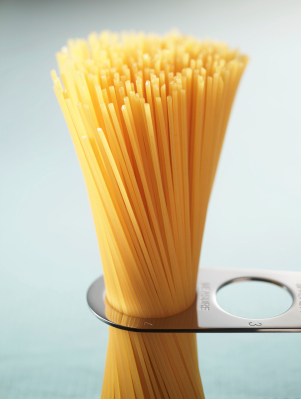
Portion Reality Check: Learn How to Enjoy Sweets, Beverages and Salty Snacks

By Janis Jibrin, R.D.,TheBestLife.com lead nutritionist

Portion size is directly related to pants size, especially when it comes to high-calorie treats like ice cream, alcohol and chips. Previously we’ve looked at proper sizes for starch servings. Now we’ll tackle sweets, beverages and salty snacks.  

Sure, none of these foods are necessarily nutritious, but they do make life more fun. That’s why on Bob Greene’s Best Life plan, we’ve set aside a portion of your total daily calories to spend on treats like these. The more daily calories you can consume while maintaining a healthy body weight (or getting down to one), the more “Anything Goes” treat calories you get. You gotta love exercise—it allows you to eat more (treat) calories.

Keep in mind that treat calories are included in the daily calories listed below—they’re not extra. So, if you’re trying to lose weight, and taking in 1,600 calories daily, 1,500 would be spent on fruits, lean protein and other nutritious foods, and 100 on treats. (more…)

Portion Size Reality Check: Learn How to Eat Healthy Starches

By Janis Jibrin, M.S., R.D., TheBestLife.com lead nutritionist

A little calorie denial is OK, but if your denial’s deep, sooner or later you’ll pay the price on the scale. My recommendation: Take a few weeks to measure your food. Once you get portions under control, you’ll automatically cut back on calories. Rolling your eyes already? I know, so many people can’t stand the idea of measuring, but I’m going to make it a little easier by asking you to track just one type of food for a week.

Sure, you could measure and weigh everything that crosses your lips, but most of us aren’t getting fat off of fruit, vegetables, fat-free milk, fish and other healthy, low-calorie foods. It’s bread, potatoes and other starchy foods, as well as fried foods, sugary beverages, sweets, salty snacks, and too much butter, oil, mayo and other fats that get us all into trouble.

This week, I’m going to ask you to focus on one major waistline saboteur: starches. Your goal is to cut way back on white bread, white rice and other refined grain products and enjoy healthy starches like whole grains and sweet potatoes in moderation. (They’re more nutritious and make you feel fuller than refined grains.) For some people, the “in moderation” part can be tricky. That’s why you’ll get so much out of measuring and tracking servings this week; pretty soon you can put away the measuring cups and just eyeball your plate. In just a few weeks, you’ll emerge a portion pro, and you’ll love the results on the scale. (more…)

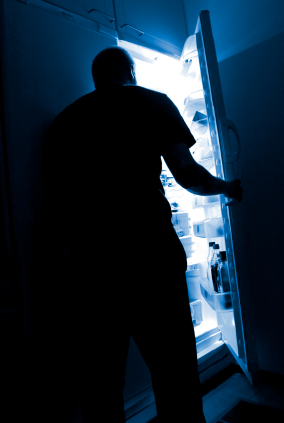
Bob Greene’s 5 Dangers of Nighttime Eating

By Bob Greene for TheBestLife.com

When is a calorie not a calorie? Many experts argue whether you eat 300 calories in the morning or in the evening, it’s still 300 calories. This may be true in a physiological sense, but as you are no doubt aware, losing weight is about more than just calories in and calories out.

In my experience helping people lose weight, I’ve seen first-hand how dangerous nighttime calories can be. That’s why one of my Best Life guidelines (one that I’m a stickler about) is to stop eating at least two hours before bed. Here’s why I’m a strong supporter of a nighttime eating cutoff:

1. You miss the opportunity to burn off extra calories at night. If you overeat during the day, you have a chance to be more active in the ensuing hours (when you’re more likely to have the energy to do it) and burn off those extra calories. At night, as your body prepares for sleep, you don’t get this chance.

2. Evening hours are a danger zone for dieters. A lot of mindless eating happens at night. In front of the TV, after a long, stressful day at work, many of us just want to check out as we fill up. That’s a sure-fire recipe for disaster. One of our bloggers struggled with this problem, until she tried the eating cutoff. (more…)

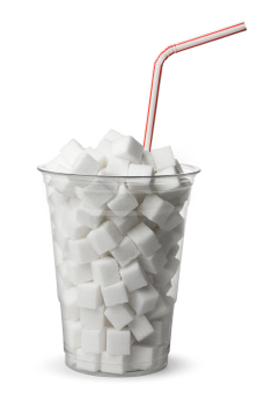
Sweet News about Sugar: It’s Not Harmful in Moderation

By Janis Jibrin, M.S., R.D., Best Life lead nutritionist

Have a sweet tooth? Then you’ll love to sink it into this bit of good news: Sugar, in moderation, doesn’t seem to be harmful. If you’re like me, you’re breathing a giant sigh of relief—after all, some of the joy would drain from my life if sugar left it!

How much can you get away with? Before I give you a number to shoot for, you need to learn two sugar lessons. The first is what “sugar” really is: sweet-tasting carbohydrates that contain calories (that excludes artificial sweeteners). Some common examples are sucrose, the white granules you stir into coffee; high fructose corn syrup, which has a similar chemical makeup as sucrose; fructose and glucose in foods like fruit and in honey; and lactose, the sugar in milk.

Next, you have to learn to determine if a sugar is added or naturally occurring. Naturally occurring sugars, like those found in fruit, milk and yogurt, are generally not a problem (unless you have diabetes or pre-diabetes). The vitamins, minerals and phytonutrients in these foods more than make up for any ill effects of the sugar.

Added sugar, on the other hand, is a big problem for most of us. That’s because added sugar is “empty calories,” meaning it contains plenty of calories but no nutrients. In excess, it can make you fat and increase your risk for metabolic syndrome, a condition that sets you up for heart disease and type 2 diabetes. It might even make you stupid, as I recently reported. And for some people, cookies, candy and other sweets are addictive. (more…)

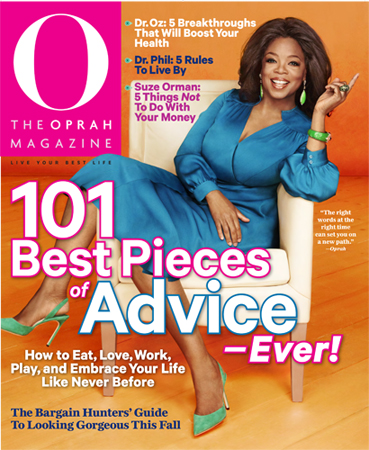
The Best Advice Bob Greene Ever Gave Oprah, and Vice Versa

Everyone finds inspiration in different places. Whether from a book, a speech, or even a friendly conversation, words have a way of striking us at the right time and place and motivating us for the better.

For Oprah, those words struck years ago while speaking with Maya Angelou. The poet shared what Oprah calls the best advice she’s ever received. “When people show you who they really are, believe them the first time.” They are words she lives by.

For a woman whose every word is hung on, it was actually quite easy for Oprah to share the best advice she’s ever given. Her go-to bit of insight is to tell people to find a way to be most themselves. “Listen to the rhythm of your own calling, and follow that,” she said.

If you’re looking for more guidance on how to eat well, work hard but allow yourself to play hard too, and embrace your life in a more present way, then Oprah has 101 of the best pieces of advices you’ve ever heard. It’s the feature in the October issue of O Magazine, which just hit newsstands. (more…)

9 Good-for-You Goodies Worth the Indulgence

By Bob Greene from TheBestLife.com

Here’s a not-so-surprising fact: Deprivation diets don’t work. Ever notice that when you try to avoid a certain food—cookies, candy, wine—you just end up wanting it even more? And worse, you often wind up having more of it than you would have if you’d simply allowed yourself to have a small amount in the first place.

On the Best Life plan, we build treats right into your daily eating plan. After all, what would life be like if you couldn’t enjoy the foods you love? The trick to making it work is to enjoy these foods in moderation. (Check out how Best Life lead nutritionist Janis Jibrin plans for treats.) We offer a set amount of calories, called Anything Goes calories, per day that can be used toward your favorite foods.

If you want to use them on indulgent foods, that’s fine. If you’d rather put them toward treat foods that also offer some health or nutritional benefits, all the better. Need some ideas for nutritious nibbles? Try any of the healthier bites in the slideshow.

View Good For You Goodies Slideshow

How Much Sleep Do You Really Need? New Research Points to a Magic Number

By Bob Greene for BestLifeDiet.com

How many hours of sleep did you get last night? If you answered seven (or right around there), then you’re in great shape—seven seems to be the magic number for sleep, according to new preliminary research.

You may already know that skimping on shuteye is associated with a number of problems. Your ability to focus and your reflexes are impaired, which can lead to accidents and decreased productivity. Then, there’s a whole host of physical changes that occur when you’re sleep deprived. For instance, your metabolism slows down and your body pumps out more ghrelin, the hunger hormone, and less leptin, the hormone that signals fullness, putting you at an increased risk for obesity and diabetes.

That’s enough to make you want to pull the covers over your head! But researchers from Brigham and Women’s Hospital in Boston found that too much sleep is not good for you either. In fact, it seems to impair memory and brain function.

Using data collected from 120,000 nurses who are part of the Nurse’s Health Study, the researchers found that those who logged less than five or more than nine hours of slumber per night scored lower on cognitive tests than those who slept around seven. (They presented their findings at the recent Alzheimer’s Association International Conference.) That means that logging the right amount of sleep may help keep your brain sharp and potentially protect against dementia as you get older. (more…)