





Tag Archives: brain health

Brain Neurons Influence Weight Gain and Diabetes

Jason Knapfel manages content for the WeightWise Bariatric Program in Edmond, Oklahoma.

If someone tries to motivate you by telling you that weight loss is “all in your head,” they may be right in more ways than one. A lack of AgRP brain neurons has been linked to a greater potential for being obese or developing diabetes. However, that outcome may be linked to your diet… If a study on mice can be shown to have a parallel to humans.

According to a research report published in The European Molecular Biology Organization (EMBO) Journal, lack of AgRP-neurons, brain cells involved in controlling food intake, led to obesity if the mice studied were fed a regular carbohydrate diet. However, when the animals are raised on a high-fat diet, they end up leaner and healthier.

The different outcomes are due to how the AgRP neurons influence the way the body breaks down and stores nutrients. Mice that lack the brain neurons don’t adapt well to a carbohydrate diet and appear to have a metabolism best suited for a high-fat diet. (more…)

To Train Well, Train Your Brain: The Difference Between Finishing and Failing

Famous athletes are often admired for their great skill, superhuman strength, or fantastic endurance. What many forget that there is something an athlete needs even more than these attributes: a trained mind.

Mental preparation has increasingly become important as sports have evolved. Sports psychology is a discipline completely devoted to the study, and adages like “mind over matter” are common in everyday speech. Although there is still much to learn about how the brain works in connection with fitness, athletes can learn many mental strategies to help improve their game.

Endurance athletes know how important keeping one’s mind in control is. In long races, the body will eventually send messages of pain to the brain and the athlete will want to stop. To finish, you must be able to not only keep going, but also keep up a good pace. Pain and injuries are inevitable; giving up is not. (more…)

Oprah’s 6 Foods That Feed Your Brain to Prevent Memory Loss

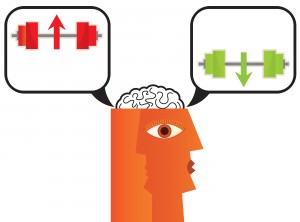
Want to think sharper? Prevent your brain from shrinking? (Yeah, that happens.) Keep your brain from aging? You can’t exactly take your brain to the weight room, but you can feed this muscle a diet rich in vitamins B, D, and E, choline, and omega-3 fatty acids. That’s why making sure your diet is rich in the six foods on Oprah’s Great Brain Grocery List will not only feed your mind, but feed your body with plenty of essential nutrients.

While there’s no cure for Alzeheimer’s or dementia, often times we can do a lot to prevent these memory diseases from taking hold of our lives. New research finds that memory decline sets in as early as our mid-40s, according to O Magazine.

Click through to see which foods you need to start tossing in your cart.

View Oprah's Great Brain Grocery List Slideshow

Also Read:

Grow Some Fresh Brain Cells and Ward Off Alzheimer’s with Daily Exercise

High-Fat Diets Cause Brain Inflammation

Dr. Oz’s 2-Day Detox Diet in PEOPLE is More Proof He’s Sold Out

Grow Some Fresh Brain Cells and Ward off Alzheimer’s with Daily Exercise

Not only can exercise improve your health, but an increasing body of research is finding that exercise benefits your memory. The advantages may be as diverse as reducing the risk of cancer, spurring the growth of new brain cells, and preventing Alzheimer’s.

In a study published in Proceedings of the National Academy of Sciences in 2026, researchers found an improvement in participants’ blood flow to a memory-related brain area as well as increased scores on memory tests after a three-month-long workout program.

Another study, conducted at Cambridge University in 2026, showed that running stimulates the brain to grow new cells in the hippocampus, a part of the brain associated with memory. Mice were given rewards of sugar if they nudged a square to their left, and nothing if they nudged a square on their right. One group then had access to running wheels, and after their exercise they outperformed sedentary mice’s ability to pick the right square by nearly fifty percent. Tissue samples also showed that they had hundreds of thousands of new brain cells. (more…)

Our Brains Light Up at the Sight of Sugar

Not sure they needed to do brain scans to prove that seeing images of sugary treats makes us want them. Never-the-less the scientists did and they showed just how much we love our desserts and what power they hold over us.

According to Linda Carroll at MSNBC.com, the researchers had women look at images of sugary treats like cookies, cupcakes, and cake while being scanned. The brain scans showed that the regions of the brain that deal with hunger and reward lit up. This study had very similar findings as a previous study involving cocaine addicts. When the addicts were shown images of drug needles the same portion of the brain lit up. Wow, sugar and cocaine pack some serious power in our bodies. All of these findings were discussed at the annual meeting of the Endocrine Society. (more…)

High Fructose Corn Syrup and Memory Loss Research Study Needs a Control Group

Yet again it seems that mass media is not accurately portraying scientific research. This time the research is by Fernando Gomez-Pinilla, a professor of neurosurgery at the David Geffen School of Medicine at UCLA and a professor of integrative biology and physiology in the UCLA College of Letters and Science. The headlines are claiming that high fructose corn syrup (HFCS) damages memory or “makes you stupid“. Unfortunately, the study was not done with a control group on a regular diet, just rats eating HFCS and other rats eating HFCS with omega-3 fatty acids, so it is difficult to draw any solid conclusions from the research.

When trying to navigate a maze learned six weeks earlier, the rats that had only been eating HFCS “were slower, and their brains showed a decline in synaptic activity. Their brain cells had trouble signaling each other, disrupting the rats’ ability to think clearly and recall the route they’d learned six weeks earlier,” according to researcher Gomez-Pinilla. This could imply that:

  • HFCS causes memory loss
  • Or it could be interpreted that HFCS interferes with focus and attention span
  • Or it could mean that omega-3 fatty acids counteract the harmful effects of HFCS (more…)

Meditation is Fitness For Your Brain

Flitting about like a hummingbird, dancing around every thought, whim and compulsive urge is how many of us go about our day. With an extremely high level of external stimulation hitting us from all angles (the computer screen, cell phone beeps, television commercials, radio jingles, shimmering billboards, etc.), giving our brain a rest is getting harder and harder to do.

Some people just don’t take the time to sit quietly, and thoughtlessly yet mindfully examine their state of being. Many of us claim to be too busy, disinterested or skeptical of the benefits a little time out of mind can provide. But science continues to uncover the truth that sitting quietly, slowing our thoughts and relaxing our brain may do more for us than we think.

Meditation, from its rise in popularity in the late 1960’s to its revival among millions of modern peace seeking yogis, has proven beneficial on so many levels. It is not only physically relaxing, it also helps make us smarter and feel less stressed.

(more…)

High-Fat Diets Cause Brain Inflammation

by Kelsey Murray

Have you ever wondered why people who are already obese continue to gain weight? Is it laziness, a lack of desire to lose weight, or something else? Two new studies that have been published by the Journal of Clinical Investigation shows that it might be something else: their hypothalamus works differently.

The hypothalamus part of the brain controls how often we feel hungry or thirsty, in addition to controlling our need for sleep and our body temperatures. This means that when the hypothalamus is not working properly, someone might still feel hungry even if he or she has already eaten a lot of food.

In one of the studies, it was found that neurons that surround the hypothalamus of obese humans and obese rats are often damaged by inflammation. This inflammation could be caused by high-fat diets, which are notorious for causing inflammation throughout the body. Although it takes weeks or months for inflammation from high-fat diets to occur in other parts, it only takes a few hours for the same thing to happen in the brain.

The other study found that mice that ate a high-fat diet were slower to replace the old, non-functioning neurons. This could also hamper the hypothalamus’ ability to regulate hunger and other bodily functions.

(more…)

Brain Health Supported by Diet Rich in Vitamins and Omega-3s

fruits, vegetables, fish and whole grainNew research shows that a diet rich in omega-3 fatty acids and vitamins B, C, D, and E supports brain function in older people and is also associated with lower levels of brain shrinkage. Additionally, diets shown to be high in trans-fat were associated with lower levels of mental capacity.

The study used blood tests to determine the diet and nutrient levels of 104 participants with a median age of 87. To determine mental abilities, the participants completed memory and thinking skills tests. Forty-two of the participants had MRI scans taken of their brains to find their brain volume.

Published in the medical journal Neurology, researchers reported that age is the largest contributing factor to mental decline, but diet is also made a significant difference. Vitamins and omega-3s are important components of any healthy diet, so it’s not surprising that these nutrients are also important for brain health. In particular, omega-3s have been shown to play an important role in mental health. I spoke with Michael Gonzalez-Wallace, author of Super Brain, Super Body, about the role these nutrients play in brain function.

(more…)

Can Exercise Strengthen Your Brain?

By Becky Striepe for Care2.com

A new study out of the University of South Carolina suggests that it can!

The study looked at two sets of mice: one set exercised (on tiny, adorable treadmills!) for an hour each day, while the other set was sedentary. At the end of the experiment, the researchers had both sets of mice do one treadmill “run to exhaustion,” and then looked at the state of their brain cells.

What the scientists found was that the brain cells of the active mice had “newborn mitochondria.”

(more…)

Beginner’s Guide to the Chakras, Part Two

A brief background plus an overview of the first three chakras was outlined in part one of the Beginner’s Guide to the Chakras. The following is a continuation of the guide that explains the fourth, fifth, sixth and seventh chakras and what you can do to keep them open and in balance.

4th Chakra

Sanskrit name: Anahata
English name: meaning “unstruck”
Location: middle of the chest
Associated body parts: heart, lungs and arms
Color: green
Element: air
Sound vibration: YA

  • Governs sense of unconditional love, heart-felt gratitude and the ability to share.
  • When your fourth chakra is out of balance you may have difficulty giving and receiving unconditional love for yourself and others. You might also have a weak heart, suffer from arrhythmia, heart palpitations or certain breathing problems.
  • Yoga poses such as camel, bow and cobra help to open and balance the heart chakra.

(more…)