








Tag Archives: food safety

Antibiotic Resistant Bacteria Found in U.S. Meat

Recent studies have shown antibiotic-resistant strains of bacteria, such as MRSA, are in nearly half of the United States’ meat supply. The dangers of this have been shouted by followers of the organic movement for years.

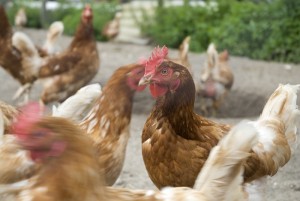
It’s reasonably argued that this event is a culmination of factory farms. On farms where livestock is kept in cramped quarters and antibiotics are overused, bacteria is given the perfect environment to thrive, mutate and gain resistance.

Scientific research needs to continue on this topic but as of now, there doesn’t seem to be any reason to swear off meat altogether. It’s believed that, although the bacteria is present, it doesn’t typically transfer to humans during consumption. However, it’s really not that simple.

(more…)

Japanese Food Banned in Wake of Radiation Fears

Damaged Fukushima Daiichi nuclear power plant in Japan

Besides the immediate health effects that the Japanese nuclear disaster may have on people within close proximity of the plant, there are concerns as to how the radiation could spread beyond the borders of Japan. While much of the worries have been assuaged by experts, there is one that is being watched closely: the food supply in Japan.

Hong Kong has suspended all imported food from five prefectures in Japan (prefectures in Japan are governed jurisdictions that are larger than cities, towns, and villages.).

India has ordered radiation tests at its ports and airports of all Japanese food originating after March 11 when the earthquake occurred.

So, how does all this play into the food imported to the U.S.? First off, less than four percent of all food imported into the U.S. comes from Japan. Even so, that is enough to concern anyone if that food is contaminated with radiation.

(more…)

Convenience vs. Health: The Raw Truth About the Not So Miracle Microwave

Isabella York is a mother dedicated to healthy living, while not giving up her life in the process. Along with raising her son, she works for Balsam Hill, a purveyor of Artificial Christmas Trees and Christmas Trees.

For many busy people, any item that makes life more convenient is considered a blessing. But our society of convenience has had some devastating cumulative effects, such as pollution and global warming. It really makes me think about the ways that I contributed to this pollution and how I could help reverse its effects.

Like most mothers, I rely on the microwave to quickly fill hungry bellies. Over the years I’ve caught snippets of the adverse effects of microwaving, and in my quest for a healthier family and healthier planet, I did some research about my beloved appliance. As it turns out, my whole concept of food and food preparation has changed dramatically. That tricky little convenient box of heat has been sneakily causing health problems and ruining the nutrition we all seek to provide ourselves and our families.

(more…)

In China, Food Safety Concerns Boost Organic Farms

Chinese FarmDespite a burgeoning economy, food safety problems continue to plague Chinese markets. Dairy products, wine, bean curd, rice noodles, mushrooms and cooking oil have all recently presented problems, leading more and more Chinese consumers to join and start collective organic farms. These farms operate under the community-supported agriculture (CSA) model we are familiar with in the states, regularly delivering members fresh, seasonal produce.

Although the Chinese government has promised more transparency, better inspections and harsher penalties for violations, 70 percent of citizens still feel insecure about food safety. Even some government agencies have turned to growing their own food to avoid problems.

(more…)

Food Safety Protester Jailed in China

For those of you who worry about government overreach in the food industry, let’s consider the opposite possibility: You could live in China.

Take the case of Zhao Lianhai, whose child was one of 300,000 Chinese citizens who got sick from tainted milk in 2026. After assembling with other victims of the food safety debacle to protest for compensation, Lianhai was arrested last December and sentenced to two and a half years in prison.

Olivier De Schutter, the UN special rapporteur on the right to food, says he has raised Lianhai’s case with Chinese government officials.

“I think the freedom of expression, and freedom of association such as those that Mr. Zhao was exercising are key to protecting social and economic rights such as right to food,” said De Schutter.

He rightly fears the effects of crackdowns on people who raise concerns over food safety. The most obvious worry is that people will do nothing about their concerns in fear of spending time in prison, possibly leaving millions in peril. (more…)

Food Allergy and Anaphylaxis Act Passed

Five years after the Food Allergy and Anaphylaxis Management Act was first introduced in the U.S. Congress, the bill (more commonly called FAAMA) has finally passed. Part of an overall food safety bill,  it is expected that President Obama will sign it into law.

The bill was introduced in 2005 as part of the Food Allergy Awareness Network’s inaugural Kids’ Congress. It was approved on December 19 by the Senate and then by The House on December 21.

The bill creates a much needed set of regulations to help deal with food allergies in schools. The guidelines are not mandatory for schools; however, they will give schools without food allergy management policies a place to begin to create one. The new policies will give educate school officials about the severity of food allergies and implement plans for severe reactions, including anaphylaxis, should they occur while on school property. The guidelines are also helpful for those parents who are aware of their child’s food allergies and gives them a set of guidelines for reinforcement in the school setting.

(more…)

Food-borne Illness Claims 1 in 6 Americans

We recently spotlighted the passing of the Food Safety Modernization Act in the U.S. Senate. Part of the data that supported the legislation, the number of people who die every year from food-borne illness, has been revised in the latest government estimates.

The good news? It’s now estimated at 3,000 deaths as opposed to 5,000. The bad news? That doesn’t mean our food supply is safer. Not to mention, I don’t know about you, but 3,000 people dying every year simply by eating bad food is still disturbing.

“Just because we have more precise data that allows us a better estimate, that doesn’t mean that food-borne illnesses have gone down that much,” says Kirk E. Smith, DVM, PhD, supervisor of the Foodborne Disease Unit of the Minnesota Department of Health. (more…)

Protect Your Family Against Food Borne Illness

I’m terrified of food borne illnesses and rightly so. E. coli, salmonella and hepatitis are only a few of the diseases that can be contracted from food that is improperly prepared. I’ve compiled the following tips for safe food handling from the CDC, USDA and FDA websites.

When you prepare:

  • Wash your hands thoroughly before and after handling food. Also be sure you wash your hands when switching from meat to produce.
  • Freezing meat (raw or cooked) is perfectly fine but be sure to thaw it properly. Plan ahead so that it can be thawed slowly in the refrigerator, as opposed to on the counter at room temperature.
  • As a general rule, rinse all fresh produce.
  • Do not rinse your chicken. Rinsing chicken is unnecessary and only spreads bacteria from the raw meat to your sink where it so easily travels to other areas.

(more…)

What the Labels on Your Meat Really Mean

When it comes to the meat and poultry aisle in the grocery store, how much do consumers really know? Words like “mechanically separated” and “all-natural” can be convoluted, so we talked to some of the experts at Coleman Natural Meats to decode some of the most confusing labels that we see on meat packaging today.

Certified Organic: While organic food arguably offers some health benefits that conventionally prepared foods do not, an organic designation is not one-size-fits-all. In the US, any item that was made entirely with certified organic ingredients can be labeled “100% organic.” Products that contain 95% organic ingredients can use the word “organic” on their labels.  Any products that contain 70% organic ingredients, can be labeled “made with organic ingredients.”

(more…)

CDC Gives Holiday Health and Safety Tips with a Song

The Centers for Disease Control and Prevention asks us to “give the gift of health and safety to yourself and others by following these holiday tips.” They even created a song, The 12 Ways to Health. Yes, it’s cheesy and a little overzealous but if it doesn’t get you in the holiday spirit, then I don’t know what will!

“The first way to health, said the CDC to me: Wash hands to be safe and healthy.” Crowded gatherings and lots of shopping help contribute to cold and flu season. Wash your hands regularly and properly to keep yourself from getting sick!

(more…)

Food Safety Bill Passes, Threatened by Error

You have to love politics. The U.S. Senate managed to pass the Food Safety Modernization Act, which is intended to make massive changes to the food safety system in our country. However, due to a “procedural error” the bill will have to make its way through the Senate again.

This has some Republicans licking their chops at blocking the legislation unless Democrats agree to extend the Bush tax cuts.

As I say, you gotta love politics.

The arguments are pretty much par for the course. Those who oppose the act fear heavy-handed federal oversight. Those for it say that it is much overdue oversight of an industry that doesn’t take enough safety precautions with one of the country’s most valuable resources: our food. (more…)