


Tag Archives: meat

Organic Food Labels Misleading Consumers to Make Unhealthy Choices

The LA Times recently reported a dangerous food myth that has been circulating throughout the health-conscious community as of late: cookies and chips are tastier, have fewer calories, less fat and more fiber when they are organic.

Organic food labeling has been a hot button issue lately as the nutritional and medical communities often find themselves at odds with food manufacturers that market foods in such a way that consumers perceive organic products as healthier choices.

“There are a lot of myths and misconceptions out there when it comes to food marketing,” said Lisa Moskovitz, RD, CDN, of Halevy Life. “For example, Twizzlers are labeled as ‘low-fat’ but they have the same amount of carbohydrates as the average loaf of bread. And that is just one example of how [consumers] are being misled by labeling.”

(more…)

Antibiotic Resistant Bacteria Found in U.S. Meat

Recent studies have shown antibiotic-resistant strains of bacteria, such as MRSA, are in nearly half of the United States’ meat supply. The dangers of this have been shouted by followers of the organic movement for years.

It’s reasonably argued that this event is a culmination of factory farms. On farms where livestock is kept in cramped quarters and antibiotics are overused, bacteria is given the perfect environment to thrive, mutate and gain resistance.

Scientific research needs to continue on this topic but as of now, there doesn’t seem to be any reason to swear off meat altogether. It’s believed that, although the bacteria is present, it doesn’t typically transfer to humans during consumption. However, it’s really not that simple.

(more…)

Meat and Poultry to Have Nutrition Labels by 2026

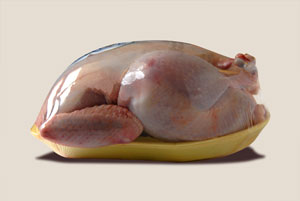
uncooked chickenThe USDA announced Wednesday that nutrition labels will be required on 40 cuts of raw meat and poultry. The measure will go into effect on January 1, 2026. It’s designed to help Americans make informed nutritional choices about the most popular cuts of meat, like brisket, tenderloin steak, boneless chicken breast and ground turkey.

“More and more, busy American families want nutrition information that they can quickly and easily understand,” said Agriculture Secretary Tom Vilsack. “We need to do all we can to provide nutrition labels that will help consumers make informed decisions.”

(more…)

Healthy Recipes to Cook for Kwanzaa

Most of us know that Kwanzaa is a week-long celebration held in the United States between Christmas and New Years to honor African-American heritage and culture. For most Americans, there is practically no such thing as a celebration without food, so we pulled together some of our favorite recipes for Kwanzaa.

Although Kwanzaa is a relatively new holiday, created in 1966, the foods used to celebrate it are based on old traditions. According to Donna Mintz, a New York City-based personal chef, savory stews and jerk-seasoned meat are excellent additions to your Kwanzaa menu.

(more…)

Protect Your Family Against Food Borne Illness

I’m terrified of food borne illnesses and rightly so. E. coli, salmonella and hepatitis are only a few of the diseases that can be contracted from food that is improperly prepared. I’ve compiled the following tips for safe food handling from the CDC, USDA and FDA websites.

When you prepare:

  • Wash your hands thoroughly before and after handling food. Also be sure you wash your hands when switching from meat to produce.
  • Freezing meat (raw or cooked) is perfectly fine but be sure to thaw it properly. Plan ahead so that it can be thawed slowly in the refrigerator, as opposed to on the counter at room temperature.
  • As a general rule, rinse all fresh produce.
  • Do not rinse your chicken. Rinsing chicken is unnecessary and only spreads bacteria from the raw meat to your sink where it so easily travels to other areas.

(more…)

What the Labels on Your Meat Really Mean

When it comes to the meat and poultry aisle in the grocery store, how much do consumers really know? Words like “mechanically separated” and “all-natural” can be convoluted, so we talked to some of the experts at Coleman Natural Meats to decode some of the most confusing labels that we see on meat packaging today.

Certified Organic: While organic food arguably offers some health benefits that conventionally prepared foods do not, an organic designation is not one-size-fits-all. In the US, any item that was made entirely with certified organic ingredients can be labeled “100% organic.” Products that contain 95% organic ingredients can use the word “organic” on their labels.  Any products that contain 70% organic ingredients, can be labeled “made with organic ingredients.”

(more…)

Will Vet Students Endanger Our Food Safety?

livestockOfficials are worried that there will be a shortage of veterinarians trained to work on farms in the near future. A more large-animal veterinarians will be retiring than there will be new vets entering the field, as more veterinary students choose to work with household pets. A recent survey revealed that only two percent of veterinary school students plan to work with non-pet animals, and only anther seven percent so much as receive training to handle large animals.

Farm veterinarians play a key role in keeping livestock healthy, and serve as inspectors at ranches and slaughterhouses. “They’re basically on the front line when it comes to maintaining a safe food supply,” David Kirkpatrick told USA Today. “Not only in the U.S., but in products we export. Vets diagnose diseases that can be transferred from animals to humans.” Kirkpatrick is a spokes person for the American Veterinary Medical Association.

(more…)

Eating Meat Gave Humans Bigger Brains

Eating meat helped the Brain evolve“You can’t have a large brain and big guts at the same time,” explains Leslie Aiello of our evolutionary ancestors. She’s an anthropologist and direct for he Wenner-Gren Foundation in New York City, which funds research on evolution. Before eating meat, our ancestors had to have big stomachs to digest large amounts of fruits, nuts, roots, tubers, and berries. These raw foods have few calories and require lots of chewing and digestive work for the body to extract the nutrient it needs, so our ancestors spent a lot time eating. The switch to high-fat and high-calorie meat allowed the body to devote less energy to digestion and permitted growth elsewhere, particularly in the brain. The brain uses 20 times as much energy as the same weight in muscle.

Having a bigger brain lead to building better tools. “What we think is that this dietary change around 2.3 million years ago was one of the major significant factors in the evolution of our own species,” Aiello said. Evidence of the carnivorous change can been detected from the presence of a tapeworm that jumped from wild dogs to early humans, meaning we once scavenged the same carcasses as hyenas. But the use of tools soon gave humans the upper hand.
(more…)

Meat Eaters are Heavier, Study Shows

A recent study of 100,000 men and 270,000 women from 10 European countries commissioned by Imperial College London found that people who avoid meat are slimmer. The results, recently published in the American Journal of Nutrition, show that avid meat eaters gained more weight over five years than those who ate less meat but ingested the same general number of calories. (more…)

Martha Stewart Discusses Benefits of a Vegetarian Diet

Image Via: MarthaStewart.com

While the queen of cooking and crafts, Martha Stewart, is not a vegetarian, recently she advised a fan about the benefits of following a meat-free diet. In fact, Martha has had plenty of experience with putting into practice a well-planned and nutrient-rich vegetarian diet, as her daughter Alexis is a devoted vegetarian.

But it’s not just Martha who is extolling the benefits of a plant-based diet. The medical community is as well. Dr. Dean Ornish, one of the leading physicians (and vegetarians) on heart disease, and author of the books, The Life Choice Diet, Eat More,Weigh Less,  and The Spectrum Diet, strongly advocates for a meat-free diet, particularly for those who are at risk for heart disease.

(more…)

Vegetarians Have Slightly Smaller Cancer Risk

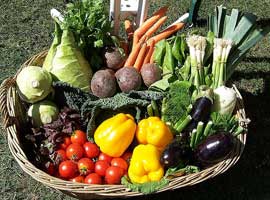
There’s now more evidence of how a vegetarian lifestyle can be beneficial. But it’s not altogether convincing either.basket of vegetables

In a British study of about 60,000 people, experts found that those who were vegetarian ran less of a risk of developing cancers of the blood, bladder, stomach, non-Hodgkin’s lymphoma, and multiple myeloma than the meat-eaters in the study.

Interestingly, this benefit didn’t include all forms of cancer. Bowel cancer was not impacted by the non-meat dietary habits. (more…)