


Tag Archives: organic

Subway Japan Grows Lettuce in Store

You might think of Subway as a more health-conscious take on fast food, but you may not think of them as being on the cutting edge. Subway Japan has opened a new store, reports AsiaJin,  called the “Subway Yasai Lab Maru Building Store” in central Tokyo. Translation? The unique store has a “Vegetable Lab” that grows fresh lettuce for its sandwiches on the spot. All the lettuces are hydroponically cultivated and pesticide free, taking local eating to the next level. (more…)

United Nations Supports Organic Farming to Fight World Hunger

In an international meeting on agroecology held on June 22 in Brussels, Olivier De Schutter stated that organic and sustainable farming is not only a solution to degraded soiled and polluted water, but can also end world hunger and global climate change. De Shutter is the UN’s Special Rappteur on the Right to Food, considered to be an internationally recognized human right. He is also an expert in agroecology.

“Governments and international agencies urgently need to boost ecological farming techniques to increase food production and save the climate,” De Schutter stated while presenting his findings. He decried the current large-scale production methods involving “improved seeds, chemical fertilizers and machines” that rapidly leads to soil and water degradation. “Scant attention has been paid to agroecological methods that have been shown to improve food production and farmers’ incomes, while at the same time protecting the soil, water, and climate.”
(more…)

Pick Fruits and Vegetables Right from the Farm

There’s a lot of great stuff about this time of year. One of the best, and maybe the least known, is the availability of the Pick Your Own Farm. Also called U-Pick or PYO, these farms are wonderful places to take your family. In some cities, these businesses are referred to as agri-business, basically business that occurs on a farm.

In the United States, picking your own berries (strawberries, blueberries, blackberries, raspberries), apples, and vegetables is most common. Pumpkin patches, often with associated corn mazes, hay rides and wagon rides are common in the fall. Urban legend has it that You Pick Farms started after WWI, when labor was hard to come by and farmers were short on workers.

(more…)

Walnut Week: Chef Greg Higgins Talks Healthy Cooking

All this week, I’m covering walnuts. From nutrition to culinary uses, I’m exploring what top fitness, nutrition, and culinary experts have to say about this “bumpy” nut. Up next is my interview with Chef Greg Higgins. If you’re into “green eating,” this is your guy. Find out what he has to say about how you can eat healthy and green:

1. As a restaurant chef, what is essential for creating healthier menu options? Whether it is swapping out butter for a healthier oil, or lower-fat dairy, etc., how do you keep high-taste intact while still offering healthful options?

We use olive oil as our primary cooking and flavoring oil. That in conjunction with a steady supply of local, seasonal and sustainable fruits, vegetables and whole grains.

(more…)

Pesticides in Foods Linked to ADD

We all strive to get our kids to eat healthy foods – we push fruits and vegetables every chance we get. But could that actually be harming our kids? Recent studies seem to point to this troubling thought. Exposure to pesticides used on many foods – including frozen blueberries, fresh strawberries and celery – appears to boost the chances that children will be diagnosed with ADHD.

(more…)

Pesticides and Organic Produce

Guest bloggers, The Nutrition Twins® Tammy Lakatos, RD, CDN, CFT and Lyssie Lakatos, RD, CDN, CFT are authors of The Secret To Skinny and Fire Up Your Metabolism.

Our clients often ask us if they should be concerned about the pesticides that are used on their produce. 

Here’s what you should know.

Most pesticides contain several toxins. Pesticides cause cancers in cell cultures and in animals. They may also cause hormonal changes which can cause additional harm. Studies also show pesticides increase the risk of cancer in humans. The National Cancer Institute found that farmers exposed to pesticides tend to have higher than expected rates of cancer of the lymph, blood, lip, stomach, skin, prostate, brain, testes and soft tissue.  

Naturally, you’re probably wondering—should you stop eating fruits and vegetables?
No. Their benefits far outweigh their risks. However, weigh your risks of specific fruits and vegetables. Start by taking a look at the list of fruits and vegetables below. The ones that we call “The Dirty Dozen” are the ones that contain the most pesticide residues. 

(more…)

Kirstie Alley Launches Weight Loss Company Organic Liaison

It’s been exactly two years since Kirstie Alley walked away from Jenny Craig, having lost 75 pounds on the program, and announced she was dreaming up her own weight loss program.

Little did she, or we, know, that while she was passionately working on starting this company, she would gain back the 75 pounds she lost, plus ten. We’ve watched Kirstie’s weight fluctuations for years. Using Oprah as a stage for promoting her weight loss, and confessing her weight gain, Kirstie made yet another appearance today. This time, it was to promote her new show on A&E, Kirstie Alley’s Big Life premiering March 21, and her new company, Organic Liaison.

She says she’s been working with a team of scientists to create an organic weight loss plan and is now excited to share with all of us Organic Liaison. It’s a multi-layer membership and supplement program that supports the weight loss efforts of men and women, and is meant to “escort you into the world of organic weight loss,” says Kirstie in the site’s introductory video. (more…)

Logos That Really Mean “Green” or Organic Foods

More and more products are coming out touting that they are less harmful to the environment or are earthy friendly, but in order to use this type of labeling the product must be manufactured with minimal energy and packaging should be made of recycled materials (think the paper grocery bags at Whole Foods supermarkets). Not all manufacturers follow the full guidelines that entitle this “green” messaging, so by referencing the logos listed below you can ensure that the products and produce you purchase are in fact “green”:

USDA organic logo For products to use the USDA labeling it must contain at least 95% organic ingredients that have not had any chemicals, fertilizers, pesticides or genetically modified organisms used. (more…)

The Pros and Cons of Going Organic

One of the hottest buzz words in food right now is “organic.” I want to help you better understand what these foods are, what you stand to gain from them and a few of the negatives.usda organic

What is organic?
In order for a food to be labeled organic it needs to be grown and processed without using any genetic engineering procedures, or without any synthetic/artificial fertilizers (must use real fertilizers).  Organic foods are grown without the use of all “-cides”, meaning no pesticides, herbicides, or fungicides.  Also, the food must be grown or processed without antibiotics, preservatives, chemicals, or use of radiation.  In short, the food was produced and processed in the most natural way and delivered to consumers in the purest form without any chemical tainting. To be certified organic a product must bare the USDA certification of 100% organic.  This seal means the farm has been evaluated and tested by a set standard of practice and is certified after passing. (more…)

5 Good Reasons to Shop a Farmer’s Market

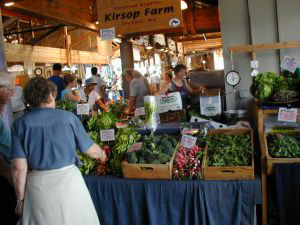
farmers-marketFarmer’s markets are markets that allow customers to purchase locally grown, flavorful, farm-fresh, organic produce.  This type of market is great because it comes straight from the ground to your hands.  This type of market allows farmers to develop personal relationships with the buyers and the consumers can show their loyalty with the farmers.  The setup to the market varies, but typically it takes place once or twice a week at a designated public place.  Some markets even make it more of a social get-together by providing live entertainment. (more…)

Digging out the Truth on Farming Legislation

farm-tractorThe internet has been a buzz with talk of conspiracy, genetically-modified foods, contamination, restrictions on organic farming, and backyard gardens being banned. Recent recalls and contamination of peanut butter, pistachios, spinach, and tomatoes and concerns about outbreaks of bird flu and mad cow disease seem to be driving three pieces of legislation that have been proposed and referred to committees. It has been suggested that these contamination events were stunts to ease the way for these freedom-restricting bills. Others suggest that the terminology used for organic products and food labels do need some clarification. The fear and outcry seem to result from the vague and confusing nature of the legislation.

With names like the Tracing and Recalling Agricultural Contamination Everywhere Act, the Food and Drug Administration Globalization Act, the Food Safety and Tracking Improvement Act, and the Food Safety Modernization Act of 2026 it’s no wonder there is confusion about what is and is not being regulated, to what extent, and by who. After reading through HR 875, the proposed bill most likely to come to a vote, I can testify that there is not much more clarity to be found in the actual legislation than there is in all the alarmist blogs and email forwarding. (more…)