




Tag Archives: fda

Del Monte Files a Lawsuit Against the FDA for Cantaloupe Recall

We should be able to trust the Food and Drug Administration to protect us against foods that might not be safe for our consumption, right? I never would have questioned this before, but after Del Monte Fresh Produce recently filed a lawsuit that could have long-term consequences against the regulatory organization, I am starting to have my doubts.

Let me explain: The FDA recently forced Del Monte to halt the importation of its Guatemalan cantaloupes because there was a possibility that the fruits could have been contaminated with salmonella. Then, Del Monte fired back against the FDA with a lawsuit. This all seems like standard operations, but the problem is that in the future, it is possible that the FDA will become more reluctant to issue warnings against possibly-contaminated foods for fear of being taken to court.

(more…)

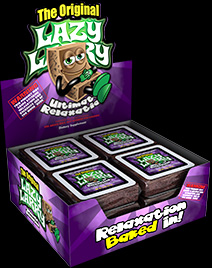
Lazy Larry Brownies Remind of the Danger of Natural Additives in Food

By Jill Buonomo

Most health-conscious consumers routinely avoid additive-laden foods. But are they missing hidden dangers by accepting “natural” additives at face value?

The Food and Drug Administration might say so. Earlier this week, the FDA issued a strong warning to HBB LLC, the manufacturers of “Lazy Larry” brownies, a product laced with melatonin and marketed through convenience stores and the company’s website. The FDA says it can seize the brownies if the company continues to manufacture and sell them.

Melatonin is a hormone that, while “natural,” affects the sleep-wake cycle and can make consumers sleepy. According to the FDA the addition of melatonin makes the brownies unsafe. Included on the packaging is a warning against driving or operating heavy machinery after consumption.

Although melatonin is fairly unregulated as an over-the-counter supplement, the FDA suggests that consumers, especially children, pregnant or breastfeeding women, and those with autoimmune diseases should consult their doctor before eating melatonin-laced foods. Some medical research suggests that use of melatonin could result in reproductive, cardiovascular, ocular and neurological issues.

(more…)

New Nutrition Label Designs Make Information Easier to Understand

The winning food label design

Never again will American grocery shoppers need to take up aisles trying to read a food label only a dietician can understand.

A New York Times article reports that the University of California at Berkeley School of Journalism project aims to redesign the confusing nutrition labels on food packages.  Several competitors entered their ideas for an improved and easy-to-understand nutrition label. The project entries are not part of the Food and Drug Administration’s official effort to change the nutrition label, but their ideas will most likely be heavily considered.

“There are a lot of things right with the current label, but at the same time people are confused. The question is whether a new nutrition facts label could help people make more educated decisions,’’ Lily Mihalik, co-creator of the project, said in the article.

The winning entry came from Renee Walker, a San Francisco visual designer, who used color-coordinated bar graphs that depict the proportion of ingredients in the food product. The simple design and visual appeal could make food labels easy to understand at all levels.

(more…)

Physicians are Concerned Supplements are More Popular Than Ever

The supplement aisle of any supermarket or natural grocery store can be overwhelming. There are hundreds of products on the shelf, all claiming different benefits. Some are labeled with a letter of the alphabet, others are named after a tree root, and some seem like they belong on the spice aisle.

With an industry so big and so confusing, it’s alarming that there are still no strict regulations for these over the counter products. This has been an on going health frustration, leading doctors and legislators to speak out.

In 1994, President Clinton signed the Dietary Supplements Health and Education Act (DSHEA). This placed dietary supplements as a subcategory of food. Therefore supplements can go to market without submitting proof of safety or efficacy to the U.S. Food and Drug Administration (FDA). 17 years later, this law remains despite the stories of harm and the urging of physicians for change.

(more…)

Fortified Foods May Lead to Vitamin Overdose

Here in the U.S., the Food and Drug Administration (FDA) regulates food safety. Denmark’s equivalent to that is the Danish Veterinary and Food Administration, also known as the DVFA. Stateside, we tend to think of extra vitamins as a positive thing but in Denmark, vitamin fortified food is a diet-don’t. The DVFA has made it clear that their stance on fortifying foods with vitamins and minerals is one of suspicion and concern.

The theory held within the DVFA is that a properly balanced diet negates the necessity for supplementing with extra vitamins. In fact, they believe so strongly in the dangers of vitamin and mineral overdose that fortified foods must first be approved through a pricey application process. Foods found to contain what the DVFA classifies as dangerous levels of fortification are not granted approval.

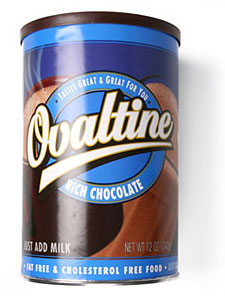
Among the products recently pulled from the shelves of a small Copenhagen store is Ovaltine. At my home, we use Ovaltine as a chocolate milk treat because it’s nutrient enriched- I feel a lot better about that decision as opposed to pouring a giant glob of chocolate flavored syrup in to my son’s cup. What strikes me as particularly odd is that Ovaltine hasn’t yet been granted shelf-space and yet Red Bull (with its copious amounts of both vitamins and caffeine) has, according to the New York Times.

(more…)

New Rules for Sunscreens Coming by Summer 2026

As the first official week of summer is now behind us, we find ourselves outside more and more. You may be wanting to get your daily dose of Vitamin D. You might be training for that next 5K, marathon, triathlon or playing in a summer softball league. We want to make sure we protect ourselves from injuries, but also protect ourselves from sunburns! Damage from the sun can lead to early skin aging, wrinkles or skin cancer. Sunscreen is an important way to protect your skin from harm, and because of this, the industry is about to get a major overhaul.

The Food and Drug Administration has proposed new regulations that will change the way information on sunscreens is presented to you, the consumer. Currently some of the information can be misleading and
confusing.

(more…)

A Magic Pill: What You Need to Know About Diet Pills

Don’t you wish you could be like Alice in Wonderland and drink a magic potion and you’d be smaller? Many diet aids claim to do just that. But before you go running to the diet aisle here are a few things you should know:

BUYER BEWARE!

1. They are not evaluated or approved by the FDA. This means these products do not go under the same safety and efficacy scrutiny as a prescription you get filled from your friendly neighborhood pharmacist. If you are someone who has diabetes, high blood pressure, high cholesterol or any other health conditions or are taking any prescription medications you definitely want to check with a doctor first before you start to take anything.

(more…)

Japanese Food Banned in Wake of Radiation Fears

Damaged Fukushima Daiichi nuclear power plant in Japan

Besides the immediate health effects that the Japanese nuclear disaster may have on people within close proximity of the plant, there are concerns as to how the radiation could spread beyond the borders of Japan. While much of the worries have been assuaged by experts, there is one that is being watched closely: the food supply in Japan.

Hong Kong has suspended all imported food from five prefectures in Japan (prefectures in Japan are governed jurisdictions that are larger than cities, towns, and villages.).

India has ordered radiation tests at its ports and airports of all Japanese food originating after March 11 when the earthquake occurred.

So, how does all this play into the food imported to the U.S.? First off, less than four percent of all food imported into the U.S. comes from Japan. Even so, that is enough to concern anyone if that food is contaminated with radiation.

(more…)

LAP Bands Approved by FDA for Wider Use

LAP Band

Lap Band

The Food and Drug Administration officially approved use of gastric bands, also known as Lap-Bands, for people with a BMI of 30 or higher and have an obesity-related health problem. The previous regulations only approved the device for people with a BMI of 40 and no additional health problems or a BMI of 35 with health complications. The new regulation is in accordance with recommendations made by an FDA panel in December.

Allergan, the maker of the Lap-Band, originally applied to lower the threshold to anyone with a BMI of 35, regardless of other health complications. However, the new provision only includes people with conditions such as diabetes or hypertension, the threshold for otherwise healthy people remains at a BMI of 40. “In order to target this therapy to patients who will benefit the most, the approved indication is limited to patients at the highest risk of obesity-related complications,” said Karen Riley, a spokeswoman for the FDA. According to The New York Times, an estimated 26 million Americans are now eligible for the surgery.

(more…)

HCG Weight-Loss Claims Are Fraud Says FDA

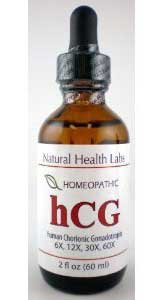
Homeopathic hCGThe FDA announced yesterday that there is no evidence that hCG is an effective means of weight loss, and further called hCG weight-loss products fraudulent and illegal. Although the products do not appear to be “a serious direct health hazard or a serious indirect health hazard,” says Elizabeth Miller, the FDA’s leader of the Internet and health fraud team, “they could be subject to enforcement at any time.” The 500 calorie “protocol” to be followed while taking hCG is surely the cause of all weight-loss that users observe, and Miller says that the products are at least “economic fraud.”

Another major problem with many hCG products is that many claim to be homeopathic. True homeopathic remedies use a very small amount of a disease-causing substance to treat a condition. However, hCG is a hormone made by the placenta during pregnancy, and its use in no way could be considered homeopathic. “We are aware of HCG products that claim to be homeopathic, but it is not recognized in the Homeopathic Pharmacopoeia,” said Miller, adding that such products “are not recognized by the FDA as homeopathic drugs, so they are unapproved drugs and are illegal.”

(more…)

Alcoholic Caffeine Drinks Banned as We Know Them

Despite their popularity among college campuses, caffeinated alcoholic beverages that contain a potentially lethal combination of caffeine and alcohol have been removed from the shelves in the U.S. following reports of students becoming dangerously drunk.

One beverage in particular is called Four Loko, a fruit-flavored energy drink that contains 12% alcohol, making it twice as strong as a regular beer, and one 23.5 oz (694ml) can contain as much caffeine as a tall Starbucks coffee.

Four Loko is one of a variety of similar drinks for sale in the U.S. and last month, the U.S. Food and Drug Administration called on the top four producers in this category to remove the beverages from shelves this month.

Dr. Joshua M. Sharfstein, the FDA’s principal deputy commissioner, has said that evidence suggested that the mix of caffeine and alcohol posed a “public health concern.”

(more…)