Author Archives: Brooke Randolph

About Brooke Randolph

A private practice therapist in Indianapolis, Brooke encourages, equips, and empowers parents and individuals to make changes that strengthen their lives, their careers, and their families. She believes physical health and emotional health are interconnected. Brooke stays in shape by walking, lifting, and biking with her family, and she spends much of her free time cooking for her family.

“Gluten-Free Diet Linked to Depression” is Another Gross Misrepresentation of Medical Research

“Gluten-free diet linked to increased depression and eating disorders” – the headline immediately caught my attention. As I read the first article, I was theorizing in my head about the chemical impact of gluten and carbohydrates in our brains and bodies, as well as the mental strain of adhering to a strict diet and the extra effort it requires. I thought a correlation between depression and a gluten-free lifestyle was possible, I thought about all my friends and family members living gluten-free, and I started digging for the actual research to investigate the experimental method used. What I found was that the alarming headline was taken from partial statements made by an experimenter, but the entire findings were not taken into account.

Unfortunately, this can be common in the news media and blogosphere where the focus is more on attention-grabbing sound bites rather than in-depth analysis and education. It is my sincere hope that everything I write (here and elsewhere) and everything you read at DietsInReview is researched and thought out, and we are not jumping to conclusions or publishing alarmist headlines simply because it is provocative.

In this case, the research found that those women with celiac disease (177 surveyed) who were most compliant with a gluten-free diet reported “increased vitality, lower stress, decreased depressive symptoms, and greater overall emotional health,” according to Josh Smyth of Penn State. This sounds like the opposite of the alarmist headline that grabbed my attention. The caveat is that those surveyed, even those managing celiac disease well through a gluten-free lifestyle, reported “higher rates of stress, depression, and a range of issues clustered around body dissatisfaction, weight and shape” compared to the general population.” (more…)

Why We Are Drawn To And Repelled By Celebrity Weight Loss Stories

As we hurtle toward 2026, you may be feeling inspired and resolute to make this new year a new chance to create the life that you have always wanted or to improve on the life in which you already find so much joy. As we turn the calendar to an entirely new year, it seems easier to find hope and believe in possibilities. Unfortunately, experience has shown us how powerful habits can be, and despite our purest resolutions, most of the time our goals lose momentum before January ends. It is important to find the accountability or inspiration that can keep you on track to achieve whatever goals you have resolved to obtain in 2026.

Some find celebrity weight loss stories to inspire them to begin or stick with their own weight loss journeys. A 15-year old boy from Mississippi named Kris was inspired to drop his weight by Patrick House, winner of Season 10’s Biggest Loser. As reality television stars, those like Patrick may be more capable of inspiring us because it is easier for us to relate to them than it might be to relate to other successful celebrities. If we are able to identify with someone who has faced a similar challenge, we believe that we can experience similar results.

Writer Chamein Canton explains that her 60 pound weight loss “wasn’t inspired by Jennifer Hudson, Kirstie Alley, Valerie Bertinelli, Marie Osmond or anyone else. They were more frustrating to me than anything else because they could afford to take care of themselves with nutritionists, personal chefs, personal trainers and all of the other accoutrements that come with celebrity.” Chamein did not identify with the emotional struggles of temptation and habit change of these famous women because she saw the resources at their disposal. Despite these resources, we have watched celebs like Kirstie Alley and Oprah yo-yo gaining and losing weight over and over just like so many others who struggle with weight. This can be another aspect that helps us identify with a particular celebrity and his or her weight loss journey.

(more…)

Understanding Food Hoarding as a Symptom of Anxiety

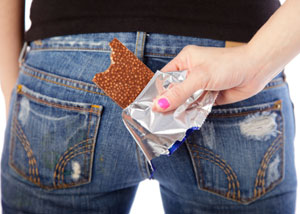
Hoarding food is something that I talk about frequently in adoption preparation classes. It is common and to be expected that children who have not always had enough and not had parents to look out for their best interests would want to hide food for later. Parents need to be vigilant to clean out pockets so chocolate bars do not go through the wash, and clean up rooms to avoid rodents, insects, and rotting food. In cases of adoption, I encourage parents to be calm, avoid commenting on the behavior, and patiently wait for it to extinguish itself, which it will in the majority of cases.

There is less written about food hoarding in adults, although there is some written about older adults who hoard food, particularly those that have lived through the Great Depression. Primarily, hoarding food is a sign of anxiety surrounding the availability of food and sometimes it is a compulsion, something that one feels driven to do to ease anxiety. There is a slightly higher percentage of females than males that hoard food, and often the hoarder lives alone and is mostly socially isolated. Nearly three out of every four adults that hoard food do not believe that it is a problem.

Hoarding food is also a lesser discussed symptom of an eating disorder as well. It is most understood as a symptom of bulimia when a sufferer stashes away binge food items. Food hoarding can also be a symptom of anorexia, however. In the throes of anorexia, sufferers can become obsessed with food despite the fact that they will not allow themselves to ingest it. It can be comforting to anorexia sufferers to have food items available, especially if their body has transition into a starvation mode.

(more…)

Ease Winter Eczema Flare Ups With Internal and External Changes

Winter means cold, dry air, forced heat in your homes, lots of layers, and wool coats and sweaters. For me (and probably for some of you) it also includes a nosebleed or two at the beginning of the season and lots of long, hot showers. All of this drying, constricting, and irritating isn’t very good for your skin and can lead to dryness, itching, and even what is known as winter eczema. Eczema is an inflammatory skin condition that manifests with itchy skin and a rash and is believed to be triggered by both internal and external factors.

External factors that trigger eczema include the dry air, cosmetics, rough fabrics close to the skin, and even hot showers. Suggestions to manage external factors include using gentle skin cleansers, moisturize daily, cutting back on hot showers or baths, and keeping soft, breathable materials like cotton closer to skin. Dr. Shirley Madhere of Holistic Plastic Surgery also suggests “occasional colloidal oatmeal baths, castor oil massages, and moisturizing the body with shea butter.” Ahmet Altiner, M.D., F.A.A.D. of UWS Dermatology & Skin Care explains that “exercise promotes sweating and water loss. Although it is unlikely to cause eczema, in people who are prone to it, dehydration can exacerbate an atopic dermatitis flare.”

Externally, Michelle L. Butler CHHC, AADP, RYT suggests using “unprocessed (no bleaching, refining or deodorizing) organic virgin coconut oil… on the dry, cracked, peeling skin of eczema sufferers. Make sure to massage the oil deeply into the area. The medium chain fatty acids in coconut oil are easily and quickly absorbed into the skin, and will provide instant relief.”

(more…)

Time Magazine Confuses Healthy Stress with Anxiety

The TIME Magazine cover article from December 5, 2026, by Alice Park titled The Two Faces of Anxiety has raised a bit of a ruckus online. Mostly, bloggers have questioned the choice to make Why Anxiety Is Good For You the cover art in the United States, while a graphic image of the Egyptian revolution was published in Europe, Asia, and the South Pacific editions. It has been questioned whether TIME believes Americans do not care about world events or are simply that self-focused. It seems to me that the editors of TIME simply believe “anxiety” is a buzzword that will sell in America, and apparently more than an uprising in Egypt. This seemed even more likely after watching the interview the senior editor of TIME did with CNN to discuss the problem of anxiety that they claim 18 percent of American adults suffer from.

(more…)

Choosing the Right Accountability Tool for Your Personality

There are many tools and techniques that people use to help them make life changes, especially when improving diet, increasing physical activity, and losing weight. The trick is to find the one that fits best for you. Just because one technique worked fabulously for your friend or coworker does not mean that you will find it as helpful. Different types of accountability will be effective for different personalities. Your personal motivation for life change will also impact what will work best for you.

AppsSmartphone applications often work well for the busy, on the go individual. Apps can be informative, provide data tracking, and/or hold you accountable through reminders. If your phone is never far from you, a good app may be the easiest type of accountability for you to integrate.

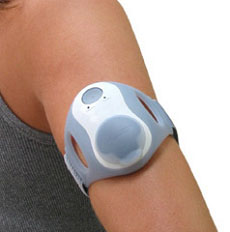
Gear and Gadgets – There are a lot of options for the techy person who enjoys gadgets and toys. These often appeal to people who enjoy technology and value quality. The opportunity to use these gadgets or toys is the motivation to increase physical activity. Some gear worth considering includes Jawbone UP, a pedometer, a fancy bike, or a BodyBugg.

(more…)

How To Prevent and Stop a Binge This Holiday Season

It’s so easy to overdo it during holiday events. Family gatherings often include obscene amounts of food in all their richest forms. It may be that you simply want to sample all the special dishes that you have not had since last year. It may be that it just doesn’t feel like Thanksgiving without the green bean casserole or it doesn’t feel like Christmas without the eggnog. It may be that you have eaten too many sweets and feel like something salty will help you feel better, or you catch yourself alternating between salty and sweet. It may be that you are mindlessly grazing on all the finger foods while catching up with family members. You may even be getting encouragement to eat more from well meaning family members. Any of those things and more can encourage you to eat too much.

For some the danger is simply eating more than intended or indulging in a food item that you have removed from your diet. When you are trying to lose weight, counting calories often becomes extremely important. When you are trying to get healthier, there are often certain foods that are best to avoid. Overindulging during the holidays can delay reaching our goals. For others the danger goes beyond simply over eating and could be considered a binge. While special foods are often part of the enjoyment of the holiday season, feeling uncomfortable from eating to much is never enjoyable.

(more…)

Fate of Organic Food Label Standards to Be Decided

The National Organic Standards Board will be holding their biannual meeting at the Hilton Savannah DeSoto in Savannah, Georgia, November 29 – December 2, 2026. “We think this meeting may well decide the fate of organic food and agriculture in this country,” said Mark A. Kastel, Codirector of The Cornucopia Institute. The mission of the Cornucopia Institute states that they are “dedicated to the fight for economic justice for the family-scale farming community. Through research, advocacy and economic development [their] goal is to empower farmers both politically and through marketplace initiatives.”

During this NOSB meeting, the Cornucopia Institute will be presenting formal testimony on several subjects including genetically modified and synthetic additives that have been petitioned for use in organic foods and drinks, including baby foods and formula. Part of their testimony will include findings from a consumer survey done by PCC Natural Markets, the largest member-owned food cooperative in the United States, that shows more than three fourths of consumers are opposed to such synthetic additives in their food.

The Cornucopia Institute is also concerned about a petition to the NOSB to allow the use of the synthetic preservative sulfur dioxide (sulfites) in wine. “Approving sulfites, not only a synthetic preservative but a common allergen, would represent another blow to consumer confidence in the organic label, which has always signified the absence of artificial preservatives,” Kastel noted.

(more…)

How to Ask Your Family For Help With Your Holiday Diet

Holidays are hectic and everyone walks in with certain expectations and hopes. People have prepared food in anticipation of sharing it with loved ones. Others may be wanting everything to be just like it was the year before. At the dinner table or even at the family gathering may not be the best time to tell your family about your food plan or to ask for their help in sticking to your weight loss goals.

To avoid emotional reactions from your loved ones, you may want to share this information several weeks in advance to give them time to work through any disappointment they may be feeling or to plan healthier options for the entire family. With large families like mine, it is difficult to get everyone in the same room or make sure everyone is hearing important announcements. There are times that it is most helpful to have individual conversations with the majority of family members; however, there are also times when sending a kind of newsletter may be the most effective and non intimidating way to share your goals with family members.

(more…)

Holly Mosier’s Tips For Managing Holiday Stress

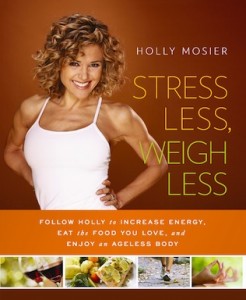
At age 40, Holly Mosier felt like she had hit a wall. “[It was] hard to come out of my bedroom at times. I was a wife, mother, stepmother, trial lawyer… trying to blend a family and maintain some semblance of peace, joy, health and vitality, and I was failing miserably,” says Holly. She sought solutions everywhere she could think of to find tools that she could work in to her life despite being a very busy professional and mother.

Despite searching in books, seminars, classes, medical studies, experts, and television shows, as she looked for practical, efficient solutions, and Holly never found the answers she was looking for, she was able to develop her own set of tools to create a “lifestyle that balances the needs of the mind, body, and spirit in a practical, efficient way.” After working these techniques into her own life and seeing the result, Holly put them together in her book Stress Less, Weigh Less. Holly has now expanded her techniques to create the following tips for handling holiday stress.

(more…)

Dealing with Family Food Pushers This Holiday Season

Food is the first and most basic way that we nurture each other. It is one of the reasons that many of us turn to food for comfort.

Providing nourishment was one of the very first ways that our mother’s soothed us as infants, both feeding us and soothing us emotionally by holding us close. When your grandmother or aunt offers you another helping, insists you try the dessert, or even tells you look too thin, it may simply be a desire to express love to and nurture you. This desire can be more intense during the holidays as sentimentality heightens emotions.

When people are pushing food to express their love, a hard rejection can be experienced as personal rejection. You may be able to distract them with loving attention. The most direct response may be to thank them sincerely for the offer or compliment and tell them that you have had enough to eat or that you are avoiding certain foods for health reasons. It can sometimes help to also offer an expression of appreciation to reinforce the positive relationship.

(more…)